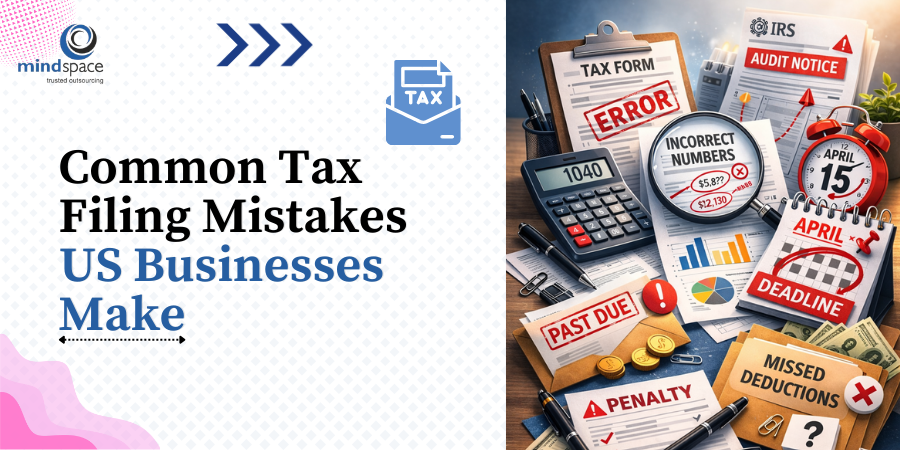
Common Tax Filing Mistakes US Businesses Make
Tax filing is one of the most important financial responsibilities for businesses operating in the United States. Every year, companies prepare financial statements, calculate tax liabilities, and submit returns according to federal and state regulations. However, many organizations still encounter Small business tax filing mistakes, often caused by incomplete financial records, misinterpretation of tax rules, or last-minute documentation. These mistakes can lead to penalties, delayed refunds, and compliance issues with the Internal Revenue Service. Clear accounting practices and organized financial documentation reduce these risks significantly. Companies that manage large volumes of transactions frequently rely on professional financial support providers such as Mindspace Outsourcing to ensure tax filings remain accurate, structured, and aligned with current regulatory requirements.
Inaccurate Financial Recordkeeping
One of the most common reasons businesses face tax complications is inaccurate financial recordkeeping. When transactions are not recorded properly throughout the year, preparing a tax return becomes difficult and time-consuming. Missing invoices, unrecorded expenses, and incomplete financial statements often create discrepancies that affect the final tax calculation. These recordkeeping issues frequently result in Business tax filing errors in the US, especially among growing businesses handling multiple revenue streams. Without a consistent bookkeeping process, financial reports may not reflect the actual financial position of the company. Maintaining organized ledgers, reconciling accounts regularly, and documenting every transaction are essential practices that help prevent reporting mistakes and ensure that tax returns are based on reliable financial data.
Misclassification of Employees and Contractors
Employee classification plays a major role in tax reporting and payroll compliance. Many businesses struggle to correctly classify workers as employees or independent contractors. Incorrect classification can lead to payroll tax miscalculations and compliance issues with federal agencies. Employees require payroll tax withholding, while independent contractors are generally responsible for managing their own taxes. When these categories are confused, businesses may underpay payroll taxes or fail to report income correctly. These misclassifications often surface during audits and can result in additional tax liabilities or penalties. Careful evaluation of employment agreements, work responsibilities, and payment structures helps businesses ensure proper classification and maintain compliance with employment and tax regulations in the United States.
Missing or Incorrect Tax Deductions
Tax deductions help businesses reduce taxable income, but errors in claiming deductions are common. Some organizations fail to claim eligible deductions due to poor documentation, while others claim expenses that do not qualify under IRS guidelines. Both situations can create problems during tax reviews. Inaccurate deductions may lead to amended returns or additional scrutiny from tax authorities. Maintaining detailed documentation for operational expenses, equipment purchases, and business-related travel is essential for accurate reporting. Clear documentation ensures that deductions are legitimate and supported by financial records. Businesses that maintain structured accounting systems are better prepared to identify valid deductions and avoid filing returns that contain incomplete or questionable financial information.
Errors in Accounts Payable and Receivable Reporting
Financial accuracy depends heavily on proper management of cash flow records. Businesses often face difficulties when tracking payments owed to suppliers and incoming customer payments. When Account Payables And Account Receivables are not reconciled regularly, discrepancies appear in financial statements and tax filings. Outstanding invoices, duplicate entries, or delayed payment records can distort income reporting and affect tax calculations. Accurate reconciliation of these accounts ensures that revenue and expenses are recorded in the correct reporting period. Companies that maintain structured accounting workflows and regular reconciliation processes reduce the chances of reporting incorrect income figures, which ultimately supports accurate tax filings and improves financial transparency during audits.
Payroll Reporting Mistakes
Payroll reporting requires careful attention to employee wages, tax withholdings, and benefit deductions. Even minor errors in payroll calculations can create discrepancies in tax filings. Businesses sometimes submit inaccurate wage reports or overlook payroll tax obligations, especially when managing large teams or operating in multiple states. Companies that use Payroll Services In USA often rely on specialized accounting teams to handle payroll tax calculations, employee deductions, and regulatory reporting. Accurate payroll management ensures that wages, tax contributions, and employment records remain compliant with federal and state requirements. Consistent payroll monitoring also helps businesses prevent late filings or underpayment of payroll taxes, which can otherwise lead to financial penalties and administrative complications.
Filing Returns Close to the Deadline
Another common issue arises when businesses prepare tax returns at the last minute. Rushed filings often increase the likelihood of calculation mistakes, incomplete documentation, or missing forms. Tax returns prepared under time pressure may overlook deductions, miscalculate income, or contain clerical errors that trigger IRS notices. Businesses that maintain year-round financial records are better positioned to prepare accurate tax filings well before the deadline. Early preparation allows accountants to review financial statements, identify discrepancies, and verify supporting documents. This proactive approach helps businesses avoid unnecessary corrections and ensures that all tax documentation aligns with current regulatory requirements before submission.
Lack of Professional Accounting Support
As businesses grow, financial operations become more complex. Managing bookkeeping, tax reporting, payroll records, and compliance requirements simultaneously can overwhelm internal teams. Many small and mid-sized organizations experience tax filing mistakes simply because financial management systems are not structured properly. Professional accounting services help businesses maintain organized financial records and ensure accurate tax preparation. Outsourcing financial processes provides access to trained professionals who understand tax regulations and reporting standards. These specialists review financial data, identify inconsistencies, and prepare tax documentation according to IRS requirements. Businesses that receive structured accounting support often reduce filing errors and maintain better compliance with federal and state tax regulations.
How Mindspace Outsourcing Helps Businesses Avoid Tax Errors?
Mindspace Outsourcing supports businesses by managing financial documentation, bookkeeping processes, and tax preparation tasks with structured workflows. Companies often face challenges when financial data is scattered across multiple systems or when internal teams lack dedicated accounting resources. Mindspace Outsourcing provides organized financial reporting, transaction tracking, and compliance-focused accounting services that help reduce tax filing mistakes. The firm assists businesses in preparing accurate financial statements, reconciling accounts, and ensuring that tax documentation aligns with regulatory guidelines. By maintaining consistent financial records throughout the year, organizations can approach tax season with clarity and confidence, reducing the risk of penalties, reporting discrepancies, or regulatory concerns.
Conclusion
Tax filing mistakes can create significant challenges for businesses operating in the United States. Errors related to recordkeeping, payroll calculations, deductions, and financial reconciliation often lead to compliance issues and additional tax liabilities. Maintaining organized accounting records, reviewing financial statements regularly, and preparing tax documentation well before deadlines are essential practices for avoiding these problems. Businesses that rely on structured accounting processes are more likely to file accurate returns and maintain transparency with tax authorities. Professional accounting support from firms like Mindspace Outsourcing helps organizations manage financial data effectively, reduce filing errors, and ensure that tax reporting remains accurate and compliant with evolving regulations.